RayK

Tiny Dinosaurs

Tiny Dinosaurs

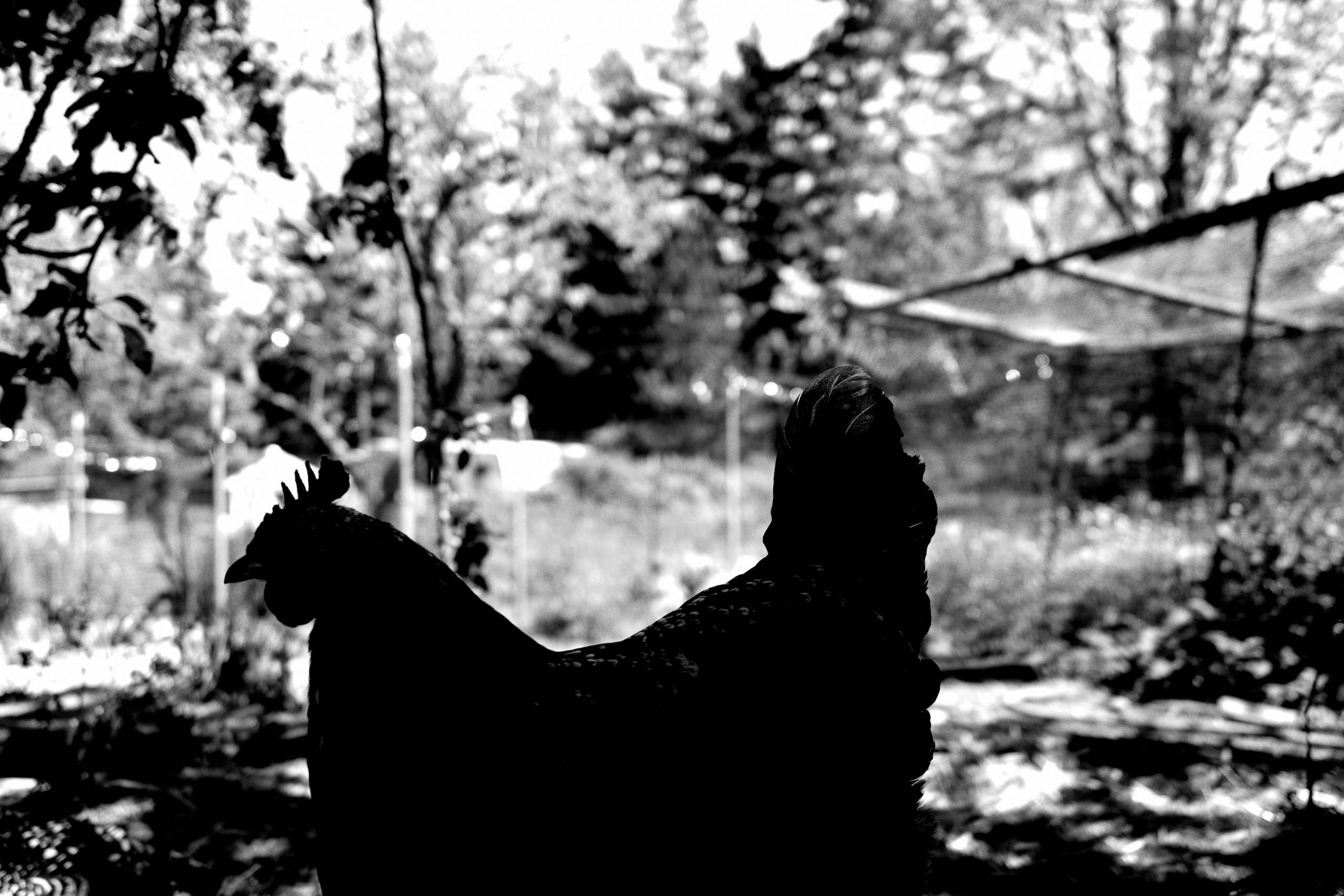
I have a job now and then, taking care of chickens. It comes with a lot a free eggs.

I have to admit I am not a fan of chickens for the most part (or goats – in any way shape or form). I did spend a great deal of my formative years on a ranch and never have thought of chickens as “pets” however I am learning more about them and the personalities the exhibit through my friends and the things they see. I do have to admit they are very pretty with some of the variations in color and feathers etc.

Still they are chickens. I am dying to add chicken arms to all of them to see them look like tiny dinosaurs, at least when I am watching them just to make it a little interesting.
After finding these, I am spending time wondering what I could add to goats to get even for the upholstery they have eaten over the years.

So how do most of you feel about “chickens”?

Next up is a long rant/opinion on NFT art and the current trend of folks with more money than sense.

Posted by RayK in notations, 5 comments
Places & memories

Places & memories

Face Down in a Memory

Posted by RayK in notations, 1 comment

Winnemucca

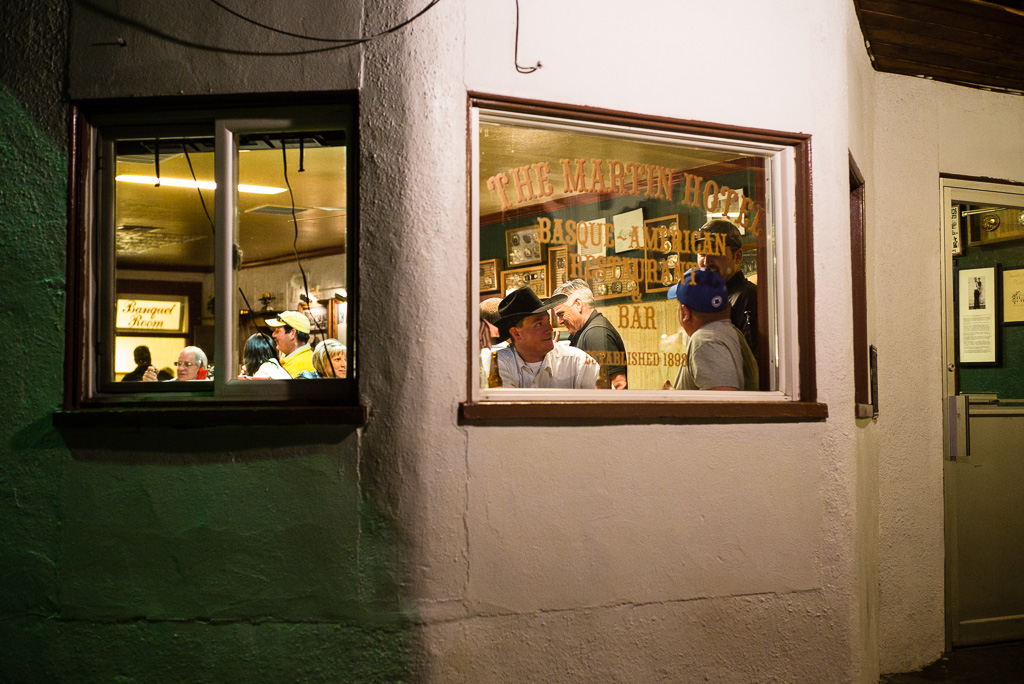
Home to miners, ranchers and Basque sheep herders, Winnemucca is a gas stop / overnight stop, one of those places most only pass through. I made just such an overnight stop in 2014 and wanted to know more so in the spring of 2015 over the Easter weekend, we spent a week getting to know Winnemucca and the people there.

Ideas come from everywhere and in this case a conversation with the saddle maker Ken Tipton led to the Route 95 year-long project. He told me there were plans to turn RT 95 into a border-to-border interstate highway. (Rt 95 is one of the few Route highways that run from border-to-border) I wanted to know about the small towns and people along that corridor of the country that is somewhat forgotten and in-between the places most go to spend time or vacation. Few major cities and mostly rural, I began the border-to-border trip and photos not long after Trump came down his escalator. After my initial series of images, I planned on returning to see what had changed 4 years later. The pandemic interfered with that plan along with the fire etc. This corridor is a slice of America that has been very much the same for generations, there were areas where it was obvious we weren’t welcome and that there was prejudice in play. Winnemucca was not one of them.

Everyone we met was outgoing and friendly, interested in what we were doing and why and free with information and help. There is a real delineation of life of those passing through and those who live there. Night life and day life both are a bit separate for those who are on the way someplace else and those who “belong”. There is a very rural and old time feel to the interactions there. Folks are polite, helpful, warm and outgoing, however you get the feeling they could handle just about anything the world tossed at them. They come across in a way that they have very firm beliefs and are willing to stand up for them. It is an old fashioned west thing in some ways, it is a conservative area but without the fanatic element. There is also the finest public shooting range I have ever seen just out side of town.

Next time you run Interstate 80 stop for a day or so and explore.

Posted by RayK in notations, 2 comments

Shorts – Travel 1

Almost everything begins with a ferry ride. Then after the dance at the border it is night-walk time again in the city.

Next post is on a 2015 trip and essay on small town in Nevada before the world went crazy.

Posted by RayK in notations, 4 comments

Things Change – part two

Things Change – Part Two

A little more personal than normal for me.

Probably the most frightening words in our language are “You have cancer” and coming on the heels of the year before, it was even more of a slam.

For the past year I have been fighting a Stage 3 cancer in the middle of a pandemic no less. The saying “the cure is worse than the problem” I am sure came from a chemo patient. As bad as the type of chemo I received was, the real pain and struggle was on those who care for me. My fight had a physical component so I knew I was doing something in the suffering.

The real fight for any cancer patient is in those that care for them. If you want to support someone in a cancer fight, look to those that surround them and give them all you can, the ones who care and love and are so helpless in what they can do. These are the true victims of cancer or for that matter, any disease. The brave are not those in the arena but those that are supporting those in there.

All that said these photos are of the first 8 hour chemo session and the uncertainty that went along with anticipation, worry, fear and ignorance. I smile when I say it got a lot worse, because it did.

For now all is good and I have been told it all looks pretty good, I will be around to see another summer and make a bit more of the “stuff” I have been making for 52 years.
I have to add that the hardest part of all this was realizing I am not 35 years old anymore (double that ). But I am gonna go out making the “stuff” I want to make and in the way I want to make it. Along with caring for those who have stood with me through this and more.

Posted by RayK in notations, 3 comments

Things Change

What I was going to write for this set of photos and what all had happened to prompt them has fallen a little to the side. The things that have happened since the beginning of all this has changed how I view the events and their meaning .

Losing everything at this stage of life is a whole different game, far different than doing so in my 20-30s or even into my 40s. At the time of the fire it was raw and emotional and a real sense of loss. A couple of years later I still feel the loss but mostly of the works and art of others I had collected over the last 50 yrs. The irreplaceable stuff , it along with the stuff that triggered memorys and represented milestones of life and people.

I am constantly reminded of what 45 Bob said often “they can’t take away your birthday” . I have the mental images and memorys inside me so nothing that was lost is lost. And I am still the richer for the experience of the work and people who made them.

There is a lot more to this story but it will have to wait for another post . As it stands these images are of my new reality and life after losing many many years of work and collecting. The comfort of age and routine is so easily broken but there is always a tomorrow if you have people and animals who stand with you.

thank you to all who stood up for me and helped me survive the fire and aftermath

Posted by RayK in notations, 2 comments
walking weekly

walking weekly

Over time this will be where we see the new stuff and random photos i find on regular basis along with a bit of opinion

Posted by RayK in notations, 1 comment

The Function of Color

“The difficulty with color is to go beyond the fact it is color – to have it be not just a colorful picture but really a picture about something. It’s difficult. So often color gets caught up in color and becomes merely decorative. Some photographers use color brilliantly to make visual statements combining color plus content, otherwise it is just empty” ~ Mary Ellen Mark

I’ve always had a bit of difficulty with color and how to use it effectively. Maybe it was all those images from newspapers and watching my heroes in black and white on television that has something to do with my lack of affinity for color. I was introduced to color as something serious in my first years of college art classes. Up to that point I had never thought about it, except I liked how Kodachrome rendered better than other films, but it wasn’t an in-depth thought. The one thing that stuck with me though was that color carries emotion.

I have lived most of my adult life in the Pacific Northwest under gray, cloudy skies. Warm emotional colors are not a big factor in my daily world. This tends to push my seeing into the black and white or my view of situations as forms or shapes. It is difficult when color presents itself to me to find a way not to make the images about the color or have the color overpower the point I want in the image.

I grew up in places that were mostly harsh bright sunshine. The Southwest is bright and pastels and warm, with accents on the adobe buildings mostly reds, yellows, and bright blues—very warm and inviting, even somewhat of a riot of colors at times. The people who live there wear colors reflecting that environment and those who move there invariably adopt much of the same color schemes. I see the same thing happening when people move to the Pacific Northwest. They tend to dress in blacks, grays, greens or muted colors like those who live here.

I see fantastic colors in photographs of places like India and East Asian countries and I ask myself if that reflects the cultural practices or is it from the environment. Does color reflect the place and people, or does it shape them? Over time traveling around the USA, I have also noticed each region seems to have its own colors, except for large urban areas which all seem to have a practical color scheme to hide pigeon crap or something else. I can’t say the Southwest has any more variation in environmental color than the Pacific Northwest, one being shades of red and brown the other grays and dark greens. Since this isn’t a camouflage to fit social practice, I believe it is more of an environmental sense of place that is created from weather and the countryside. Living in the places we do begins to shape how we see subjects or ideas and the longer we live in one place, the more that environment shapes how we see light and color.

The colors I wonder about are those that surround us not only the natural colors but those that people wear and make of their environment. Artists tend to use the colors of the culture around them. Georgia O’Keefe being the example that comes to mind in the Southwest and Morris Graves or Mark Tobey in the Pacific Northwest. What does color mean to us as artists? As a sculptor for many years, I dealt with forms and shapes rather than color to provide what message or meaning I wanted in my work. For those of us living in the world of gray it is a struggle to find how to handle color without it becoming decorative. I do miss the light and color of the Southwest but living where I do, my use of black and white fits. I can see forms and subjects without the distractions of color and I can concentrate on the content of an image which is what matters most.

The color of place is important to any artist. What we see daily has influence on how we use vision and voice not just in our home environment but how we see everywhere. Color is a part of who we are, vision and voice, and for some it is handled brilliantly and with care. Take for instance, Saul Leiter or Bill Allard. Their use of color never overpowers the meaning in their images. There are a few like Leiter or Allard who can handle color without it being the focus of the images they make. For many it takes a bit of an adjustment to the new forms of environmental influence to focus on the things they are trying to say without the colors getting in the way. If our images are just about color then we need to look at both our own environment and how we see the world to begin to understand what color means to us, how to use it, and when to use it to add to our work.

Colors are part of the culture and social fabric of a place. Look at where you live and how you dress to understand how you fit into the colors of place; be objective. Knowing how the colors of a place fit helps me decide if I will shoot work in color or black and white to maintain intent. There are some that shoot in black and white in the Southwest, but you still feel color in those images. I can shoot color in the PNW and those images seem more black and white because the colors are muted or flatter than in similar images from other places.

While art and images influence how we see the world, our living environment, and the culture that environment creates, also shape how we see and handle the ideas and messages we create. When we travel or shoot stories in a place other than home, it is important to take the time to feel the color of the place and people who inhabit it. Find the colors that define the place and use them to tell the story about that place. Be mindful not to let your photographs become about the color rather than the subject just because it is outside your normal way of seeing. As color has become the accepted norm for images, it is important to use it wisely and find ways to keep the messages that color sends in line with the work you are making.

Click here to see how I use color and black and white.

Posted by RayK in Conversations, 0 comments

Beyond the Ordinary

Ahmad Babbahar – Blues Musican

Driving home from Seattle one night, I noticed the way television sets reflected off ceilings or out the windows of apartments and houses—sort of a free light show. I spent some time thinking about it as I drove on to the ferry. I live in the boondocks with few neighbors and where those kinds of light shows aren’t common. I do however have a road that runs the length of my acreage. It came to me that the squirrels might enjoy TV at night because shouldn’t entertainment belong to nature as well as the city? For months after that drive home, I hit every garage sale to buy all the small black and white TVs I could find. I ended up with what seemed like miles of extension cords leading from my workshop to 12 TVs scattered around the property. In the evening I would turn them on to various channels—depending on what I could get from the antennas—to create a light show. For a quarter mile along the road, lights flickered in the trees and if you rolled down the car window, you could hear snippets of sound from different TV shows. For about a year, people would slow down on the road in the evening to see or hear the installation; it also kept the squirrels entertained. It would be difficult to do this today with the changes to the way broadcasting works but I do have the memory and experience of it along with many others.

As a kid in the early 60’s I listened to a crystal radio with a single earpiece while reading books under the covers in my attic bedroom. Wolfman Jack broadcasting from Mexico and season tickets to the Washington Philharmonic shaped my understanding of music (my mother believed in broad exposure). The appreciation of far more possibility came when my Grade 9 Humanities teacher, Robert Hilden, introduced the class to Miles Davis. Despite the school record player with bad speakers, the first time I heard Davis I discovered a whole new way of hearing, meaning and feeling in music. That experience was a moment of clarity and revelation for me and I found myself hungering for more of the same.

How I see beyond the ordinary was built over a long period of time. To a degree, I attribute it to growing up with some physical difficulties. As a kid, I had to learn to walk several times due to polio and the resulting operations. It always interested me how people moved their bodies which required observing others move and how I might control my own body to imitate that. This taught me to closely see details and pay attention to their interactions with the environment and others. The skill of seeing more and differently was also fostered by my parents in other productive ways. We spent a great deal of time in airports sending my Dad off to build a better world and waiting for him to come home. My Mom would play a game of sorts where we would watch people in the airport and learn about different places and ways of doing things. This led to making up stories for the people we saw traveling, inventing reasons for the trip and whole stories as they passed our seats. It made the waiting much more entertaining to have a collection of stories wander by. Imagination is trained and exercising it as a child helped me to develop it.

How I saw the world expanded when my mentor and art teacher, Gerry Conaway, introduced me to the ideas and thinking that went along with Conceptual Art. He pointed to the connection between ideas and the message in art and once I understood that art work, either made or found, was more than just the subject in the image or form, I began to make connections to all sorts of disparate ideas and media along with things in the real world. The notion that art or message was possible in the things we see changed the way I looked at the everyday world. I started to take a deeper, closer look at common objects and situations and even the people I met. At last, I had an outlet and semi-acceptance in art for all that time imagining stories for the world. It freed my search for something to say in my art, to run wild with some varied results. It can (and did) get rather crazy and it was a great deal of fun.

This period of learning to see was for me, also a time of development of how message is built into art and what kind of message or idea is important to audience and the history of art. It was the beginning of my understanding of what the conversation of art is, about the idea of art for art’s sake and the philosophical conversation of art. I began to recognize the dialogue between the social and the political in art and why it matters, and how it is the hardest one to control so it doesn’t become simply pandering to the masses or a popular idea of the time.

During this period, I apprenticed with Richard Beyer in Seattle. Rich began his art career late in life and built a successful practice. His belief that all art is political lead us through many a late-night discussion on the purpose of art and how it fits in the world. Rich taught me to see art in the now and how it fits into the future. Reading the writings of artists and philosophers shaped even more of how I saw things to the point that I became obsessed enough to turn them into art. As my education on seeing progressed, I learned to not only see things others did not, but I also strengthened the mental craft of being an artist by learning to make connections others didn’t perceive.

At the risk of stating the obvious, photographs are based on seeing. Learning to see in ways that are beyond the ordinary is essential to making work that will stand the test of time. This “seeing” along with something to say is what makes good work that is more than just pointing.

It also helps to have an active imagination.

Posted by RayK in Conversations, 4 comments

Education of an Artist

To be called a craftsman has become passé. Today many who are competent at the craft of photography have become self-proclaimed artists. The totality of their education is from online tutorials about composition or the technical side of how to make an image. Left with no more education than the craft and the idea of self-expression, they became the center of their own universe with presentations of navel gazing. Without any understanding of what it means to be an artist, they set out to reinvent the wheel because they had never seen one and to say nothing more than how they feel about something. It may not be a popular opinion but the notion that everyone is an artist is total bunk and a panacea for those who have no meaning in their lives. The hard truth is not everyone is cut out to be an artist no matter how much mastery of the craft of their chosen medium they gain. Being a good craftsman is important but not as essential as many seem to make it. Being handmade isn’t what makes a piece a work of art.Henry Moore never ran a foundry. Sculptor Richard Serra usually starts with a model often made from lead but the final steel pieces are fabricated by a company in Wetzlar, Germany. Cristo and Jeanne-Claude used 100 rock climbers to descend down the facade of the Reichstag and unfurl a huge silver curtain for their piece Wrapped Reichstag. Craft, meaning color and composition and presentation, is only a small part of what makes an artist.

To those wanting the education of an artist and to discover if you truly are one, I would recommend first learning the history, the whys, and the language (which will come as you learn). Second, go out and learn about life from a different perspective and third, learn the craft of being an artist. The knowledge we seek to become part of the conversation isn’t limited to schools and book study, much can also be gained from finding the right mentors. Spending time in discussion with other artists who think about more than the technical aspects of their medium is one of the best ways to learn what it means to be an artist.

Art is a long conversation with the moral, political, social, philosophical, and art itself of the society in which it is made. Not knowing what that conversation is, or what it is about, is willful ignorance. Any work that isn’t part of the conversation or an attempt at such will not be counted much past the first viewing of it. Intention and expression (beyond self-expression), something worth adding to the conversation, isn’t possible without some knowledge of more than the craft. Learning to see past the surface of the work into the history and intention of the artist is just the beginning of being able to see and understand art and what being an artist truly means. Asking questions like why was Caravaggio important to the art world and more importantly, why did he paint the way he did? What was the motive and intent of that high contrast work? Why did Robert Frank go against the grain of convention with his work on the Americans? What does it express and why? It is essential to the education of an artist to learn why earlier art was made but it is only the beginning.

A few years ago I was heartened to rediscover Ben Shan’s book The Shape of Content which I first read when I apprenticed with Rich Beyer, a well-regarded sculptor in Seattle. The defining chapter in that book is the last one where his recommendation for artists is to go out and live and work with the world outside of our comfort zone. Experience as much as you can from every possible walk of life and not as a tourist but as a real participant, so it is not simply a fly-by involvement. Work with your hands and learn about those who have nothing to do with art or the lofty worlds we pretend to live in. There is no substitute for experience for developing an understanding of what you find important enough to become obsessed with expressing in your work. Plus no one can take that experience or knowledge away from you. It is the one thing that is, and will be yours, no matter the outcome of your life.

The craft of being an artist is a mental craft not a physical one. Learning how to shape stone or to paint or photograph are all physical crafts that also apply to commercial work or design. The artist’s craft is learning to think about and to see things in a way no one else does and then generating an idea or form or object that conveys those idea. It is finding how to take the common and make it extraordinary, to take everyday objects and occurrences and give them meaning and message. For each artist how this craft develops differs but the craft itself is the same.

If you haven’t spent your early years in an artistic field, it doesn’t mean the wiring isn’t there. It is possible for some to learn how to think like an artist. Learn the conversation that art is, go experience life and pour that into your work, and then you will have something worth saying.

Posted by RayK in Conversations, 1 comment