RayK

Rules

Rules should be thought of as speed limits signs in Montana, a suggestion.

All the so-called rules—the rule of thirds, color, composition, line, perspective, and even processing rules—are nothing more than a convention of accepted ways to assemble an image or form. These rules are based in craft and the kind that apply to commercial work for advertising or decoration, not art. They became ingrained because they provide a visual experience that is comfortable and accepted by most people in order to sell something or create an environment that isn’t disturbing or food for thought.

We have been trained from an early age to see in certain ways but these rules haven’t always applied to how we process the information in images. They were developed over time by people who didn’t follow the existing rules and they changed as society and our understanding of it have changed. Neither Robert Frank nor Fred Herzog, both of whom died last week, followed the conventions of proper images when they made their most influential work. They followed their own voice and vision and created a new way of seeing. While technology and society advance the notion of good craft along, the history of art is made by those who break with tradition and create new rules for what is next.  The conversation then moves forward and that is how a new perspective on old ideas or new ways of seeing emerges.

Rules need to be, if not ignored, then bent to fit the purpose of the work. They do have a place in making art but they must be there to serve the purpose of the artist, not to provide a recipe for making something. So learn the rules of your craft, what they are for, and then question them constantly.

Experiment and fail but never expect to do innovative work following a formula of what makes a good image today. A good image is one that serves your intent and message not one that fits in what is accepted as proper. If the conventions fit or work for the intent then use them but if you see an image differently and have an idea that goes against the rules, don’t even glance their way.

Posted by RayK in Conversations, 0 comments

Attachment

I left AMU with a limited budget and no car. Earlier that year I had created a show out of what marble and soapstone I could collect. The show amounted to about 40 small pieces of work inspired by Inuit art and some Japanese work I was studying. Each of the pieces had an archaic–northern indigenous art–feel and style. Limited means to keep the work meant when the show was over, what didn’t sell was mine to figure out what to do with it. I gave a few pieces away and decided the rest could go to another art project.

I have a couple of shows in some pretty out of the way places, self-funded and installed. One is almost 40 small stone pieces buried on a 40+ acre campus of what was AMU in Anchorage Alaska and the second is a set of larger pieces along an old dock in the Bellingham Bay, Washington. One created a controversy and the other has been seen at least once since installation. I am using the words “installation” and “show” with a bit of tongue in cheek. The shows do exist. They were a real joy to install and the concepts behind them have been important to more ideas and learning ever since.

The project was both practical and conceptual in nature. It paid homage to those science guys who dig stuff up as well. I enlisted a couple of other art students and we wandered the 40+ wooded acres of campus at night burying and planting these sculptures. I left soon after and never gave them another  thought.

It was close to 10 years later that I received a phone call from my mentor, Gerry Conaway, asking me to look for a photo in the mail and to call him back as soon as it arrived (this was long before the Internet). When I received the photo and called, he wanted to know if it was one of my pieces from that show so long ago. I said yes and was rewarded with a belly laugh. It turns out the school had changed hands and with all the construction on campus, they had dug up one of my sculptures. It created many  questions and involved several people all trying to figure out what and where it came from.

On to Bellingham, where a couple of years of working on much larger pieces, created the same problem when it was time to return to Alaska. This time I had a pickup truck, but the work was much larger and even heavier than all my other possessions and possibly even the truck itself. I decided to draft a friend to help load them up, a few at a time, drive out to a local pier, and toss them over the side at intervals. These were large stone pieces that I had spent a great deal of time on and some–I believe–were very successful. There is at least one person I know, a diver, who I learned has seen the show.

In the digital age, we are able to amass huge amounts of work that are portable. Prints are cheap and easy to make, as are self-published books. Sharing or display is rampant without thought to proper editing. When I was starting, art was physical and without the digital convenience to fit years of work on a hard drive.  There weren’t the networks of ways to display work that are prevalent now. Gatekeepers in the form of gallery owners, editors, and your own sense of what is worth sharing with the world, was a refined art in itself. You had to give thought to what you might keep around and if it was something that would stand the test of time.

The criteria for this consideration was based on history and if the work did what you wanted it to do as well as being an idea that was worth saving. I believe many of the works I buried or sank met these criteria, but I had no attachment to the work other than memory and lessons learned. Repurposing it into a different kind of work was easy without the attachment. The worth of any piece wasn’t tied in any way to the cost or amount of time or difficulty involved in making it.

When editing work, viewing it from an outsider’s view is still good practice. Having enough of an education in art history to understand the work’s possible place in that stream is important, as well as a clear understanding of what you hope the work will accomplish. Looking at the work as your audience will is essential to knowing if it succeeds. Pick your audience wisely.

Being objective over more than the technical of composition or color or those sorts of details allows you to add that “special sauce” of an artist vision to whether or not the project works as intended. As part of this review, it may also be appropriate to add your ideas to push the conversation of art and not expect the majority of viewers to “get it”. Knowing what you want to achieve even if it is just to make a good picture matters before you push it out the door. No snap judgements or decisions based on “I like it”. Doing that just adds to the clutter that pervades the image world today.

Being on the move so much has prevented me from collecting my own work and if I want to see the best pieces from my past, I need to go visit them. Don’t get attached to your own work. Being your own collector is like installing mirrors on your walls instead of art. It isn’t productive or, to my way of thinking, a good practice. Attachment to past work is a detriment to making that next idea work; it tends to force us into doing the same thing over for all the wrong reasons. When the work is done, let it go. Move on to that next big thing or failure but move on. Progress isn’t made with one foot in the past.

Posted by RayK in Conversations, 0 comments

Fail in the direction of your work

When I was 21 the need for summer work—along with the idea that it was a bad ass job—led me into logging. No matter what part of logging you were involved in it was damn hard, dangerous work. Logging was an introduction to mortality and living large in community with unforgettable characters and for the next 15 years, it funded much of my art work.

I learned more than a few lessons my first summer of choker setting. “Over boxcars and under cables” was the first lesson. I began as most greenhorns do setting chokers on a high lead show. High lead is a way of pulling logs from the place they are cut to a truck loading area with a tower and cables. It is running up and down dragging 11/4 inch by 30 foot choker cables to wrap around logs and always on steep hills. Once the chokers are set, a whistle on the tower sounds and the logs are pulled up the hill to the landing where the chaser unhooks them and the cables are run back down the hill. This is a simplified explanation of what happens but you can imagine large cables with heavy steel bells swinging above your head and logs up to 5 feet in diameter being jerked up the hill.

As a logger “Fall in the direction of your work” is the one lesson that stuck with me. Falling is part of the job. There were more ways to fall down than most people can imagine and not a lot of sympathy if you do. Working in tangled brush and debris is a constant struggle especially on steep ground. Your clothing not only identifies you as logger, it is practical for that environment. Pants are cut off at top of your caulk boots to keep you from catching on stobs and slipping on logs or bad branches. When you do fall, you are part way there if you fall toward your next choker set.

As artists, I tell my students to fail in the direction of their work. When we fail in the direction we want to go, we are still ahead of where we were before. If we are trying and failing, we are continuing to move forward to our goal. Failure means knowing one way that doesn’t work so we are still gaining. If you don’t fail, it means you were never moving in any direction. We gain nothing by playing it safe and we never learn as much from success as we do from failing in the direction we want to go. Take the risk and if you fail, do it in the direction you want to go, towards the goals that matter to you. You won’t miss much of life living by this mantra.

Posted by RayK in Conversations, 6 comments
Risk

Risk

When I was climbing in the late 1960’s, we were on our own. Bad decisions or getting in beyond our skill level could be fatal. Pushing the boundaries of what we could do made us far better–and faster–than if there was a way to back out when things got tough. There was no fancy high-tech safety equipment and yes, they had helicopters but there was no way to contact them or to call for help.

Today entire companies are built around providing the illusion of risk. This is how we live now when it comes to experiences that used to be dangerous to life and limb. Safety equipment and satellite phones are sophisticated to the point where real risk requires Darwinian stupidity to have any consequences. Parents hover over their children and wrap them in foam because of the worry and what appears to be a civil right to be safe and risk-free in everything they do from the classroom to the playground. It is the new way of trying activities that in the past were full of danger without any real results for messing up.

The illusionary risk industry with its imaginary dangers has bled into other fields and become a detriment to creative thinking and personal responsibility. Today people want to make sure their work is sellable or liked by legions of fans. They avoid risk by sticking to the lowest common denominator and doing work that is currently popular with their fans. All it takes is a smidgeon of “different” tossed in to seem creative or to play up the technical to make work appear as if it is new or innovative.

Real artists take risks, career-ending risks.

They take on the “what if I do this” without the safety net. All the artists I know who are doing innovative work, pushing the conversations they are engaged in forward, are doing so in ways that transcend the craft of the medium they pursue. They take true risks with both their reputation and their use of the craft. Where craftsmen use craft as intended without pushing the boundaries to achieve a result outside the medium, artists use craft to serve the content and not the other way around.

The confusion between art and craft is rampant in the photography world. Today it seems everything is considered art and those who excel at their chosen craft are now called artists. This devalues both these terms and is an insult to those in history who took the risks and made sacrifices to create work that changed how we see. Craft has value as craft, not as art. Artists have an obligation to bend, break, hammer, reshape the craft to provide the meaning in art.

Accepting popular notions of what makes it good art is never a place artists want to find themselves. That thinking is fine for commercial work but has no place in art. Doing what appeals to the largest mass of people leads to stagnation—or worse, decoration or kitsch—and it is a far distance from the conversation art is. It is, at best, a conversation with echoes.

Posted by RayK in Conversations, 2 comments
Myth of the First Step

Myth of the First Step

Many take as truth the idea of the first step being the hardest; actually beginning is the easy part. Beginnings are full of hopes, dreams and rosy views. We start with a vision of the end and a belief that nothing will be too difficult to overcome as we head towards our goal. The reality is projects often stop after the first step once the easy part is over. 

The difficult step is the second or third step where grunt work is required. Obstacles appear or the project becomes boring assembling the parts needed to make it work. We find it easier to be distracted by another “first step”, to ignore what remains to be done, and eventually forget the unfinished work.

Artists will slog through the grunt work towards the result envisioned; dilettantes will not. We apply the layers of paint needed, put in the time under a welding hood, or hours making pictures that should never been seen. It is hours of uncomfortable, and often unproductive work, much of which is thrown out because it is not quite right.  What artists know is the body and form of the idea being built is often tedious or difficult or both. For dilettantes, time and failures build up and it is less painful to stop and convince themselves the idea isn’t worth the effort.

I tell my students how as a sculptor I would, on occasion, spend months building a piece I thought worked as intended but when I wheeled it outside of the studio and lived with it for a few days, I would tear it down and start over. Completing the entire process is the only way to know if an idea or project works. 

Being an artist means surviving the strain beyond that first step. Staying the distance is how we can gain knowledge and skill. Take that first step. And the second and third. Create work that fails because without the discipline to fail, your work will never amount to much. Without those failures, the successes won’t happen. 

Inspiration Is for Amateurs—The Rest of Us Just Show Up and Get to Work” ~ Chuck Close

Posted by RayK in Conversations, 0 comments

Craft

The finest craftsmanship and beautiful materials don’t make a work of art. They will make a beautiful object that is a joy to hold and view and one that provides the same pleasure each time you see or hold it.

This is true also for some photographs and other works of painting or sculpture. However the part we usually admire is the skill and ability of the person who made it, not the message or voice of the piece itself. The difference is craft is about the skill and mastery of that skill, not the image. Art is about the image and the skill will either add or become secondary to the work’s message and soul. It’s my contention that many folks in photography have been caught up in the skill portion of the work and can’t differentiate between the mastery of skill and the voice or message. When the two combine it makes the creation of a clear voice easier but it isn’t about how it is told as much as what is said. Not all works need to have the voice of Shakespeare to be eloquent or get the meaning across. Some photographs can use the simple voice of Steinbeck and tell a story just as well or even use a voice and skill set we have yet to discover. I admire craft for the skill of the person making the work and I admire them in the work. This isn’t the same as having admiration for the work and what it makes me feel. If the work can transcend the craft with message and feeling, it becomes much more than the maker’s skill.

I am not trying to diminish the importance of craft here, however craft without vision or something to say is not art. The development of skills and craft should go along with the development of a clear message and direction for the reasons for making something. If it were only about the craft, musicians could just play scales and we’d call it music, painters could just mix colors and we’d call it a painting, or it would be enough for us to just photograph the same subject over and over again. The addition of a piece of us through our vision combined with craft is our voice and it can be eloquent in a way that is ours alone. This brings a perspective to what we make that no-one else can duplicate because craft alone can be copied, voice cannot.

Posted by RayK in Conversations, 0 comments

Voice

Voice is not your style. Style is something that is copyable and falls into a set of categories or combination of them. Voice is unique and only belongs to one. Vision can be shared, style can be copied, subject can be repeated but voice belongs to the individual and is unique.

There seems to be much confusion on the interchangeability of style and voice. Entire plugin industries are dedicated to style and the ability to copy other photographers styles and work. Your voice is what you take with you when your style grows or changes. Two examples in the art world I use are Picasso and Noguchi who both encompassed several styles of work in their carrier but the work was always unmistakeable theirs. My friend Sabrina Henry explains voice as knowing who the designer is no matter what the fashion style of the season is.That ability to recognize a persons work based on how they say something in their work from across a room is voice. Voice is unique to the individual and is a part of them as much as their fingerprints.

Your experiences, outlook, beliefs and view of the world in general make up how you will say what is on your mind when you make a photograph. That split second of time, framing and end vision for the image is all part of those things that make you unique as a person. It is that interpretation of an event in time that is yours alone.

Ted Orland writes in his book View from the Studio Door “ We recognize that someone has found their Voice when their distinctive spiritual or emotional core becomes an inseparable part of their Art”. For a persons voice to be heard and recognized is to begin to trust your own vision and intent when creating your work. To believe in your way of seeing and saying something about the world you photograph. To stop following the latest styles, trends or fad and doing in a way that is yours alone.

This isn’t just doing something different for its own sake but trusting your gut on what you believe expresses your message and intent in a way that is right for you. Avoid buying into the latest “right” way of making images and make them in a way you believe is proper for you. Knowing the so called “rules” and putting them to work for you and your way of saying something is using your voice. Breaking those same rules because you believe it works for your intent is also using your voice. Following the crowd or making images that someone else has done because you think they are “inspiring” is using their voice not your own.

The parts that make us individual all contribute to how we say something in our work and each of us is unique in who we are. It would be impossible to duplicate who we become, our hopes, fears, loves, passions and losses have all gone into making us. These things shape our view and message, they provide us with how we see the world around us and what we want to share of that world. Our vision is what we find to share, our voice is how we express the importance of what we share.

Voice is the unique quality that give an image its power and connection. Using your own voice adds the intangible to every image we make regardless of style or media. It is the unmistakable stamp of who we are and how we see the world, added to what we have to say about it and transforms our work into a creation of unique expression.

Posted by RayK in Conversations, 0 comments

Art is a Conversation

Art is a conversation about social, moral, political, philosophical, history and occasionally with art itself in society. It is a conversation that has been going on for as long as people have made what we call “art”. We join that dialogue and add our voice to it along with an interpretation of the ongoing conversation and ideas being explored. Without a knowledge of how and what created this conversation as well as the topics and context of them, the risk of our work being self-referential only is high.

Having a purpose and something to say is a requirement for any work to be art, even if that references past art works or is intended only for those with an understanding of art history. How is it possible to make art that is significant without some knowledge of the dialogue that came before, the history of the media and the context in which that conversation exists?

By knowing who and how photographers that came before us brought photography into the larger art world. It isn’t through expression of self that adds to the conversation that art is. It is through adding to the conversation that art has been having for all of time with and about  philosophy, society and the ideals that make us human. The self being all important to this conversation is an indulgence that has meaning for that person but hardly relevant to much else.

Modern myth that we are all artists is bunk, no-one has that as innate ability. The potential may be there but it isn’t through technical learning or mastering a craft that makes a person an artist. It is through understanding the conversation art is and moving beyond the narcissistic self in what we make to join in that dialogue. It is curiosity that drives art, a rebellious curiosity that wonders and looks for the alternate view or personal view that relates to the art dialogue in a way that has meaning for more than just ones self. It is filtering that conversation through our unique personal experience and voice that adds to the history of the conversation. I often wonder about those so self important that they think the world should be interested in their “self expression” as art?

If what we engage in doesn’t reach beyond self how does it stand as something important enough for others to pay attention to. Follow that curiosity and the need to see something made, make something that has your point of view and voice in it. Don’t strive for profound or even unique, instead strive for something that expresses your opinion or view or curiosity or need to understand. At the risk of adding to the buzz words – be authentic, be you,  use what and who you are to stand for something. Then show me or tell me or make me as audience see, hear, feel or understand that point of view or opinion.

Photography is a in a very strange place due to it being a new media and not having the history that other forms of art has. The uses that photography is capable of other than art muddies the waters on how it is viewed as an art form. With the advent of the popular notion that everyone is an artist – this didn’t exist in previous times – there is the idea that study and understanding don’t matter to making art, that the technical of composition, line, form and such are all that something needs to be art. Photography is one of the biggest offenders of this because of the technical which makes learning to be competent a fairly painless and easy process.

Books can tell you the settings etc or how to process an image but in doing so they short cut the learning of so much more the older forms of visual arts taught during the learning it took to be competent with the technical of making something. I have heard it said that art was pervasive in everyday life in other times and this isn’t true at all, craftsmanship was and the two should not be confused. Salons, apprenticeships and a continuing discussion with other arts and artists shaped the next generation of artists as they learned how to master the craft it took to make art.

The art that shapes how we see the world isn’t made without a reference to the history of art or that ongoing dialogue and never was.

Posted by RayK in Conversations, 0 comments

database gone

there was a total database fail and it has disappeared on me 

new site will be up as soon as possible 

Posted by RayK, 0 comments
Announcing ART 2015 in Brewster NY

Announcing ART 2015 in Brewster NY

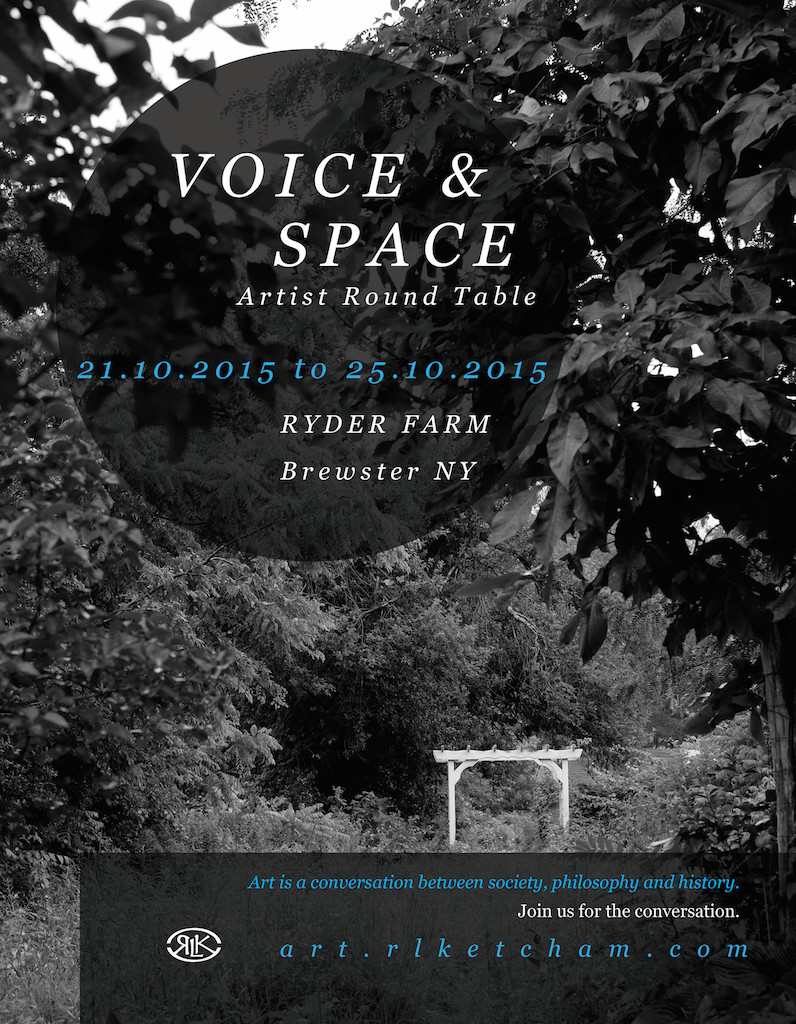
We are now in our fifth year of hosting the Artist Round Table (ART) and we are pleased to announce a very special location for this year’s conversation. Raymond Ketcham has been granted an artistic residency at SPACE on Ryder Farm in Brewster, New York where he will be hosting a four-day round table with artists and photographers.

SPACE, an interdisciplinary residency program, is celebrating its fifth season. It’s mission is “to support artists by providing a workshop space singular in its ability to reinvigorate the artists’ spirit and their work. SPACE is the answer to dormant creativity, giving artists time and space to do what they do best: create.” This 220 year-old working organic farm has been a second home to more than 575 artists who were working on 180 different projects, and included among them are Tony award winners, Guggenheim fellows and Pulitzer Prize finalists.

It is in this beautiful rustic New York country setting, enriched by artists who have come before us, that we are going to host our annual discussion for photographers on discovering their visual voice. We will talk about the 3 I’s (inspiration, imitation and influence) and we will address head-on the notion of fear in art. We discuss the difference between art and craft and between vision, voice and style. But it won’t be just photographers having this conversation because as always, we have invited artists who use other mediums of expression to join us.

This year because of the generosity of SPACE on Ryder Farm, we are adding one more day to the program. We will use this time to help create a roadmap for your journey to discover and use your own unique voice in photography. To do this, we are going to draw upon people who have previously attended ART. Their own experiences have informed all of us what works and where the challenges will lie for most of you.

If you are interested in going beyond making pretty pictures with your camera and would like to progress further along the road to being a visual artist, we invite you to send us your expression of interest.

Workshop Details

  • ART will be held from October 21 to 25, 2015 at SPACE on Ryder Farm in Brewster, New York (4 nights, 5 days).
  • Participants will share accommodations including bathrooms. Keep in mind this is a historic property dating back to 1795. It has all the amenities you will need but it is not the Ritz Carleton (thankfully!)
  • All meals are included.
  • Transportation to and from the train station in Brewster will be provided. Flights to New York and airport transfers are not included.
  • Cost US$1395.

Expression of Interest

If you would like to attend ART at SPACE on Ryder Farm, please send us an expression of your interest via email outlining what you hope to gain from being a part of the round table and what you would bring to the discussion. Please also include a link to a portfolio of your personal work i.e. no images created while on a workshop or photo tour. If these are not available online, please let us know so that we can make other arrangements to view your portfolio. We will be accepting expressions of interest until September 18, 2015 after which time, a final decision will be made regarding the list of attendees. Payment in full will be due upon acceptance to ART.

If you have any questions, please do not hesitate to contact us via emailTo learn more about previous roundtables, view posts hereTo see work from some ART Alumni, visit this page

If you’d like to learn more about SPACE at Ryder Farm, check out this TEDxBroadway video or follow their Instagram account.

Posted by RayK in artist round table, 0 comments